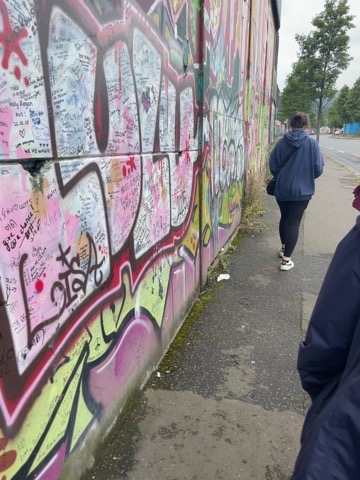
One of the ways my perspective of justice and reconciliation was widened as we heard the stories of people who experienced the conflict in Northern Ireland was through the realization that, firstly, a conflict like this is not one that can be judged by someone outside that conflict. I cannot assign my own understanding of justice to Northern Irish peacemaking efforts if I don’t understand the nuance and varying perspectives of those who actually lived through the conflict. For instance, the fact that the peace walls are still erected may, from the outside, seem to be counterintuitive to peacemaking. However, as Robert explained during our tour on Tuesday, those walls are still up because wounds are still healing and there is still some derision between communities, so many feel safer with them for the time being. Justice in this context isn’t black and white – both sides have real and valid motivations and have both suffered heavy loss and pain.
Another thing I came to understand about reconciliation was that it takes lots of time and patience. It’s been almost 30 years since the Troubles ended, but there is still a lot of hurt and trauma felt by both communities. Facilitating understanding and reconciliation between them may take many more decades and generations, but that doesn’t mean today’s peacemaking efforts are for nothing. The efforts and ideas of modern Northern Irish peacemakers will hopefully become widespread as years pass and generations come and go and the hurt slowly heals.
One of the peace walls in Belfast. Although it might seem to further divide communities, understanding local perspectives helps us understand why it is still up.
Prompt 2
I think that community storytelling, like the Theatre of Witness, help with the healing process in a few ways. First, telling these stories means acknowledging painful experiences and feelings rather than repressing them. Coming to terms with past events rather than allowing the hurt to fester can both reduce displaced anger in interpersonal relationships and start the process of self-forgiveness for actions one regrets.
Second, community storytelling helps survivors of trauma to feel seen and heard. Even if not everyone can fully understand their pain, having their stories witnessed and acknowledged may help them feel some measure of closure.
Third, community storytelling may help facilitate reconciliation and understanding through shared experiences and a recognition of shared humanity. For instance, there are thousands of people who lost a loved one because of the violence of the troubles, like how Fiona lost her brother. If a loyalist who lost a loved one listened to her Theatre of Witness presentation, they may have been able to empathize with her thoughts and emotions, even though they are technically from different communities and different sides of the conflict. This establishing connection might open the way to further conversations and reconciliation.
Finally, sharing these stories in a community setting can help educate young people who have not experienced the same trauma on the realities of conflict and the skills needed to build peace. A common theme as we learned about peacemaking in both Belfast and Derry was the importance of education in creating peace. If young people are able to understand both perspectives in the conflict, how violence was facilitated, as well as the immense pain caused by it, they will be better equipped to continue peacebuilding efforts and to avoid falling into the same cycle of violence.
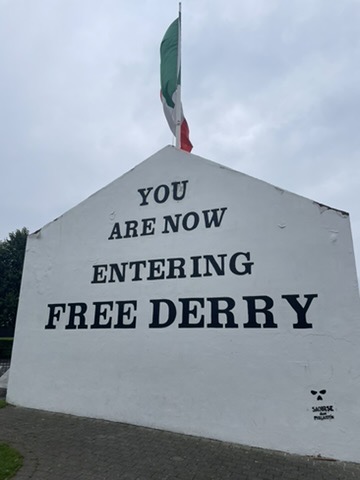
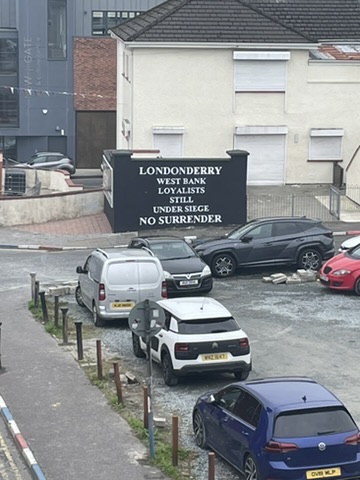
Division still exists in Northern Ireland.
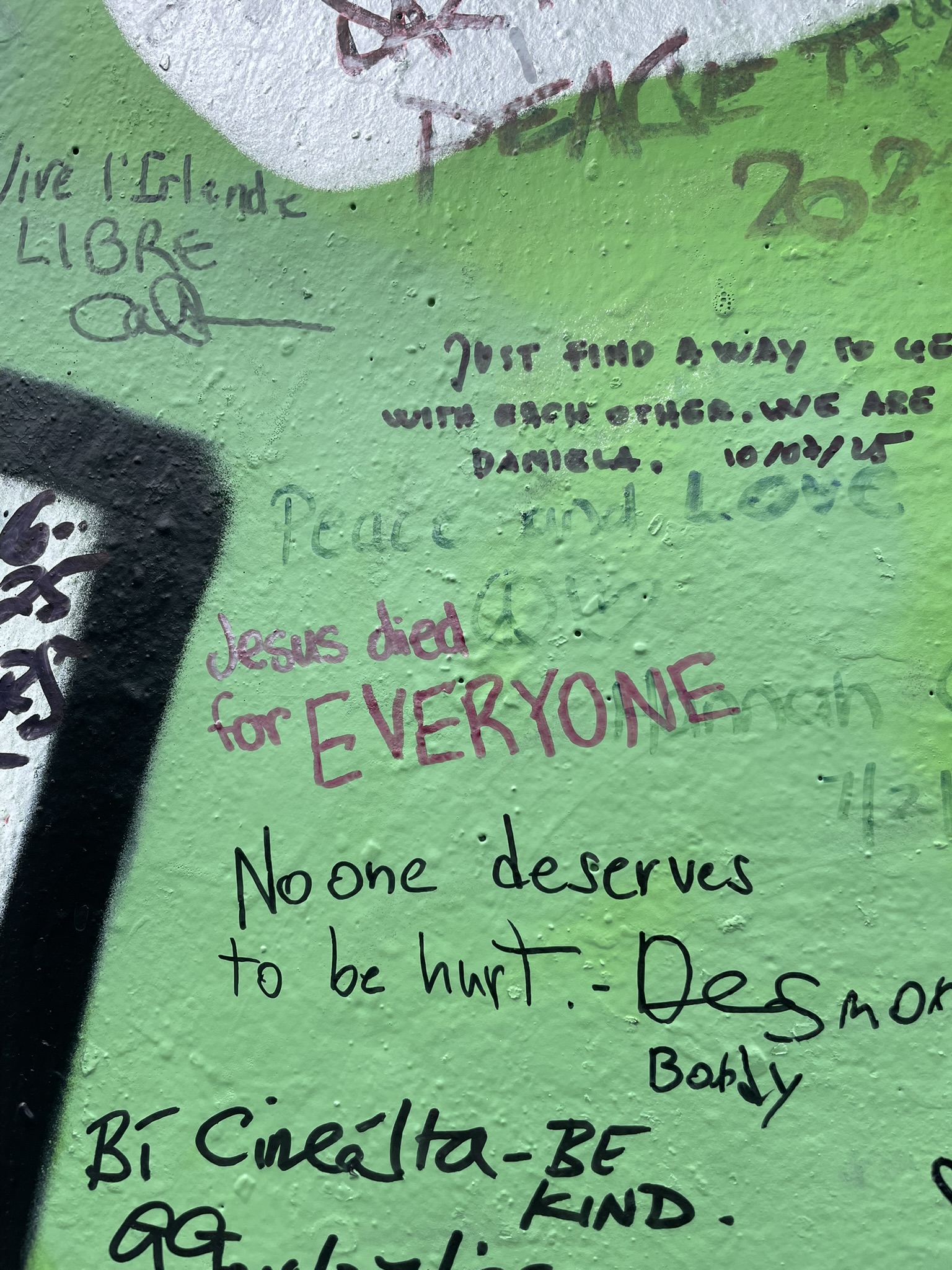
The Theatre of Witness is a tool that might help counteract hostile sentiments.