Portugal Blogs
Blog 1
Blog 1 - Lisbon
Prompt 2
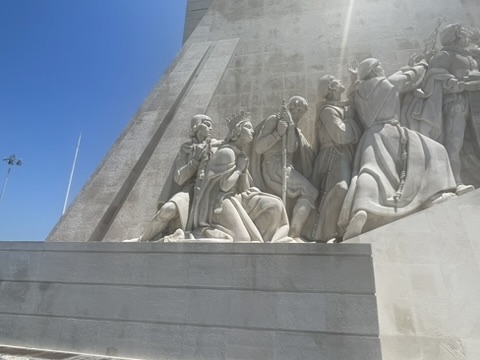
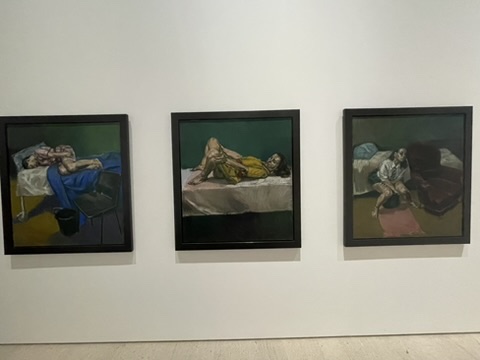
As we have explored Lisbon this last week, I’ve noticed a general lack in female perspectives in public spaces. Although there are multiple public depictions of women (and a great many more of men), these depictions do not necessarily equate to including a woman’s voice – indeed, most of these depictions are made by men and are influenced by the creator’s view of women. For example, on the Monument to the Discoveries, there is only one woman depicted, and she is at the base of the statue on her knees. The one place where I felt women’s voices were truly included was in the Gulbenkian Museum, particularly in the exhibit dedicated to the works of Paula Rego and Adriana Varejao. One display in that exhibit that I was particularly struck by was Rego’s Untitled series, which depicts women having abortions. I thought that these works were a strong (and somewhat shocking) presentation of a uniquely female experience, which highlighted to me just how much other depictions of public memory lack these perspectives.
Prompt 4
During the slave trade tour on Thursday, dehumanization was a broad theme. We learned about how human lives were assigned money value, the inhumane conditions of ships transporting slaves, and the past debate over whether or not people of African descent had souls. What interested me and caused me to think, however, was the dehumanization and objectification of women in relation to the slave trade. I already knew that children of enslaved mothers were considered the property of their mother’s owner, and I had figured that sexual assault was common for female slaves. I’ve always been very removed from the realities of enslaved people’s lives, but as we walked those alleyways, I tried to imagine what it would be like to live that life. To be captured and sold or born into slavery, to be treated as property, to have no ability to make choices about my own life, to suffer frequent sexual violence, and to see my children brought into that same reality. We’ve learned a lot about how women’s choices have been limited in different places and times, but the lives of enslaved women were on a different level of restriction.
These observations and attempts at understanding the experiences of these women have made me think about the sheer amount of freedom I possess. There are so many choices I have made and opportunities ahead of me that the vast majority of women in all of history had absolutely no access to. Across time and place, I am lucky enough to be one of the most free women who have ever lived. Although I do still want to make improvements in how women are treated in the society we live in, this week’s experiences gave me a huge perspective shift and have made me incredibly grateful for the freedoms I do have.